Pages

Showing posts with label Victories and Issues. Show all posts

5.7.13

Influential Issues: Logging


Wood is spectacular! It's flexible, strong, burnable, pulp-able. It's also very pretty—have you ever looked closely at the grain of wood?


A dense rainforest in Washington State.


A pair of Hyacinth Macaws in their nest in the
Amazon Rainforest. Aren't they cute together?
Bacteria in a pond.


...But! Forests are spectacular too! They host a diversity of life that's seldom found anywhere else. They are homes for billions upon billions of plants and animals, from the tiniest weevil to huge eighteen foot-long anacondas. Not to mention other life forms as well—there can be as many as one billion bacteria in a single teaspoon of nutritious forest soil. Forests are one big pile of life, all living and breathing together.

Logging has become more and more of an issue for forests all around the world, especially around the tropics where the jungles are wonderfully vibrant and filled with exotic and expensive woods. There are many different ways to cut down trees, each with its own environmental factors. Conservationists predict that if logging continues at the rate its going now, then over half the Amazon will be forested no more by 2030.
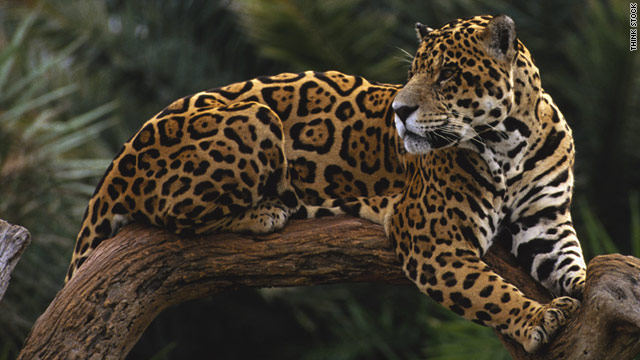
This jaguar needs lots of space to
hunt. If too much forest is cut
down, it will become
endangered, then extinct.

One common method of logging is the 'Slash and Burn'. With this method, all the trees in the area are cut, then, to enrich the soil for the next crop, the logger burns all the stumps and brush on the ground. This burning returns the minerals to the soil, but even with the deadly blaze plant life cannot grow in its former abundance for fifty years or more. 

The tools used to cut down trees are super high-performance, and make cutting a swath a breeze. Check out the video below and you'll know what I mean!

Wolves, like jaguars, need
lots of space.


Many non-recycled paper products are made from trees taken from virgin forests, and are doing their own small part in the massive-scale deforestation of the Earth. Something as innocent as tissues for blowing your nose are usually taken from forests that have been standing for as long as humanity (and the many billions of flora and fauna living in said forest) can remember.

What can you do to help? You can use less paper! Try writing down all things paper that you use in a day, and push yourself to cross off any of those items. You can use reusable or sustainable alternatives, like a cloth grocery bag or handkerchief. There are also many high quality, inexpensive 100% post-consumer recycled items available that you can use for any sort of paper goods: stationary, notebooks, printing paper--the possibilities are endless.

So much has been done to slow down the axes already--as you can see by the graph below! Not just the Amazon has that steep drop, too.


There is still much to be done, and together, we can make a difference! Little or big, positive or negative, we are constantly pushing forward.


27.3.13

The Joy of Victory: Lion Lights!


An Chinese guardian lion.
Lions are one of the most feared and revered animals in the world: from the beginning of recorded history, people have loved, and hated, lions for their skill in hunting.

A lion on a decorative panel from
the Persian Empire, 500 - 330 BC.

World lion populations have been going down at an alarming rate; an estimated 30 - 50% in the last two decades! Leading causes to this drastic decline are habitat destruction, and humans retaliating with firearms for lost cattle.

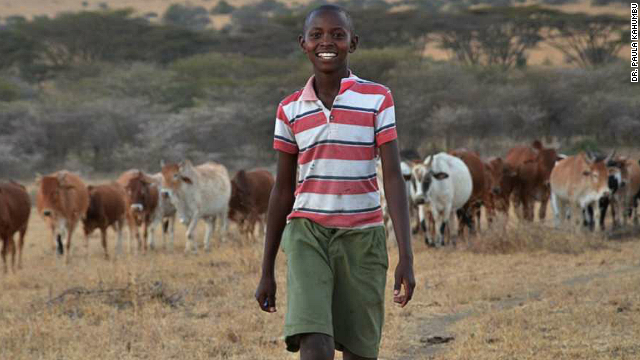
On the edge of Nairobi National Park in Kenya, thirteen-year-old Richard Turere tends to his family's cattle. He has been caring for the cattle since he was just nine years old; a huge responsibility as the cattle are one of the most precious possessions the family owns. "I'd take them out in the morning and bring them back in the evening. We put them in a small cow shed at night." This is when the lions would attack the cattle—leaving Richard to count the losses in the morning.


Richard Turere, age thirteen, in Kenya.
Richard knew there had to be something the lions were afraid of, other than a gun. Then the solution came to him when one night when he was walking about with a flashlight. He noticed that the lions were afraid of the moving light he held—and after tinkering for three weeks, an invention was born of broken flashlights and an indicator box from a motor cycle: Lion Lights!

Richard rigged these light around the cow shed, and at night, they flash on and off as if a human were walking around. The contraption was so successful at keeping the lions away, his neighbors asked him to install Lion Lights on their own properties. Since then, the invention has spread all throughout Kenya, and made its way into Zambia and Tanzania, too. A person from India is even trying them out for tigers.


A Lion Light.
By coming up with a simple, affordable, and working solution to the issue of lions eating livestock, Richard has earned himself a scholarship in Kenya's best school—go Richard! 

Let's put all our minds together to come up with more ingenious yet simple ideas to save our amazing world!


Basking in the victory of Richard's invention, this lion can live without fear of being hurt by the humans.

<> ~ <> ~ <> ~ <>

Check out this great video about Richard and the Lion Lights!


8.3.13

Influential Issues: Coffee

Coffee: the miracle bean that gives a morning buzz! Roughly one hundred million Americans are daily coffee drinkers—even more world-wide! Upwards of one billion pounds of coffee beans are consumed yearly by just America. So, where do all these beans come from? How are they grown?


The answer lies in the cloud forests of tropical countries such as Brazil and Kenya. A cloud forest is a jungle at high altitudes. Instead of getting rain, it is watered by clouds that float through it.

Cloud forests are threat-ened by a variety of things. Many people poach animals for medicine, or animal pelts. Deforestation is a major threat, with estimates of 11/2 acres of rainforest being cut down, per second! 

This Read Howler Monkey
lives in the cloud forests
of the Americas.
Even this nearly 400-pound silverback
gorilla needs your help!
Coffee plantations are a considerable part in this. Many coffee farmers strip a mountainside of its cloud forest in order to plant their coffee trees. Wild coffee trees naturally grow in the shade. When they are planted in the sun, they grow super fast and strip the land of its nutrients! A few years after the coffee trees are planted, the farmer is forced to move to a new lot of cleared cloud forest, because the sun-grown coffee trees suck out all the nutrients from the soil of the first lot.
A tree like this would take a few hundred years to grow back.

The cloud forest can't regrow on an abandoned coffee planation because the coffee trees have stripped the land of its nutrients. It takes a long while before bacteria and fungi have recycled the coffee trees and returned their nutrients to the soil, and even longer for the colossal jungle trees to regrow to their former majesty.

What can you do to help? There is an easy solution to the coffee issue: simply drink shade-grown coffee! Shade-grown coffee is grown in a cloud forest, rather then instead of a cloud forest. This not only allows the animals of the cloud forest to be more-or-less undisturbed, but the more-natural shade-grown coffee tree doesn't suck all the nutrients from the ground. Shade-growing also makes slower growing, which creates a denser, harder bean. Coffee roasters and coffee experts prefer a bean like this, as it makes for even more delicious coffee.

Most coffee shops offer shade-grown coffee. When you're drinking it, be sure to congratulate yourself on the eco-friendly, tastier way of life!

2.3.13

Influential Issues: Overfishing

Covering over 70% of our Earth, the oceans' waters hold amazing, beautiful, bountiful and just plain strange animals, and many other life forms besides!


...But what happens when the ocean begins to become... not bountiful? What happens when humans begin to realize that the fishes are getting scarce? 
Without these herring, it would be
very difficult for this whale and
many other animals to find food!


This goby is keeping watch for predators, 
while the shrimp next to it digs a hole.
When a predator comes, the shrimp gets the 
warning from the goby and both rush
into the hole!

Overfishing is the practice of taking too many fishes out of the ocean at once. When too many fishes are taken, not only does their overall number fall, but their ability to find appropri- ate mates in order to reproduce! This sets a chain reaction, because if one species of fish becomes endangered, then an entire line of marine animals could soon follow due to that one endangered fish not fulfilling its role in the ecosystem. 

Right now, the ocean's fishes are disappearing at an alarming rate. It is estimated that the large 'factory vessels' are fishing out what could be sustainably managed on two to three Earths! These factory boats are the size of football fields, staying out at sea for up to six months, and using advanced electronic equipment to track fish schools. They store thousands of tons of fishes in colossal freezer compartments on board. Also, cruel methods are used to catch the fish that often involve struggling for long periods of time and eventually bleeding to death.

Many factory vessels use huge nets—sometimes a mile wide!—to catch their target fish. However, as one can imagine, many other unintended marine animals are caught as well! The shrimp trawls, which are weighted nets that drag along the bottom of the ocean to scrape shrimp away, bring to the surface only ten percent shrimps! The other ninety percent of the haul is by-catch, which is thrown back into the water dead or soon to be.

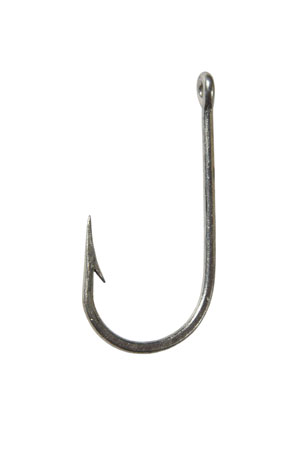
Imagine swallowing that,
and how it would catch
your throat with its barb!
A sea turtle caught in a net.
What can you do to help? Certain species of fishes are sustainable to catch in large numbers! While we still need to monitor the numbers of these fishes and the by-catch, they are much better to eat than some others. The list below shows these sustainable species. The list has been kindly provided by the New England Aquarium conservation experts.


A Manta Ray has gotten
itself tangled.

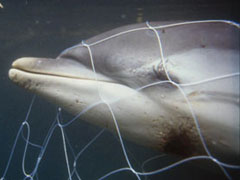
A dolphin has gotten its head stuck.


<><><><><><>
Wild caught: 

Pacific cod (longline, US)
Alaska Pollock
Alaska Salmon
Mahimahi (US) 
Pacific Halibut
Pacific Sardine
Sablefish (US)
Wahoo

Or farm-raised:

Arctic Char (Iceland, Norway, Canada, US)
Tilapia (US, South and Central America)
Hybrid Striped Bass
Rainbow Trout (US)
Sturgeon (US)
Catfish (US)

<><><><><>

Many humans have realized the issues with massive-scale fishing and worked to better it. One great new invention is the 'Turtle lights' which can decrease turtle catch by 60 percent! Yet another great invention was the 'Yamazaki Double-weight Branchline', which was invented by a Japanese tuna boat captain. This, paired with other devices, can reduce sea bird by-catch by almost 90 percent! Great job, captain!


Let's put in some effort to keep our fishy friends around.

27.2.13

Influential Issues: Mangrove Deforestation

Water slowly swirls around roots sprouting from trunks that dive into black mud. In a mangrove swamp, fish climb trees, monkeys feed on shellfish at low tide, and tigers swim as they hunt for worthy prey!


A Bengal Tiger
The Mudskipper fish climbs trees to
escape predators. It can breath air for
short periods of time!


Mangrove swamps border almost all subtropical and tropical estuaries, which are specialized places where rivers empty into the sea. High nutrient levels carried from these estuarine rivers are great for the mangrove trees. The crazy roots you see in the pictures also trap silt carried from the rivers!


This proboscis monkey's nose
amplifies the calls it makes!
Coral reefs depend mightily upon mangrove swamps. The silt caught by the mangroves would have otherwise flowed into a reef. Suspended sediment is B-A-D for corals! Corals depend on a certain friendly algae living in them to provide necessary nutrients through photosynthesis. The silt makes shade on the reef, and shade is an enemy to photosynthesis. The corals die if they are in the shade for too long.

A colorful and healthy coral reef.

Sadly, this reef is dead.

Another important thing about mangrove swamps is the amount of baby animals living there. The small spaces in between roots don't allow big predators to come into the mangrove swamps. Many animals know this, and so they lay their eggs or give birth in the mangrove swamp. 

This Lemon Shark pup relies on the mangrove
swamp for protection from predators!

Mangrove deforestation is becoming more and more of an issue. Scientists believe that over half of the Earth's mangrove swamps have been cut down! Salt pans, golf courses, hotels, and roads have been major factors in this. The most damaging thing by far however is shrimp farms.


Shrimp farmers need to take out a section of mangrove to create artificial pools for their shrimp. These pools are unusable after a few seasons of shrimp farming, and the farmers need to cut down another section of mangrove swamp to satisfy their buyers' demands. A very disturbing fact is that the farmers sometimes install electrified fences to keep local villagers out of their normal fishing grounds. What's worse, the shrimp farms have sandy bottoms that salty water can leak through, making the villager's well-water salty and undrinkable. The local people, who formerly drank clean water and fished the bountiful mangrove forests, are forced to find clean water and food elsewhere.

What can you do to help? An easy and great solution to this problem is to simply stop eating shrimp, and urging your family and friends to do the same. If nobody ate shrimp grown in these farms, then the farmers would be out of business and do something better with their time!


Many people have realized the problems with mangrove deforestation. Along the coast of Bangladesh, people sell mangrove seeds to make money, to help the environment, and to help protect Bangladesh’s long coastline against tsunamis. Along the east coast of Africa, people plant mangrove seeds in discarded cans, to help the mangroves grow. The animals, plants, and people make up a much better Earth with mangroves growing along the coastlines. Hopefully, through strong efforts, the mangrove swamps will be regrown to their original size.


Mangroves can regrow if humans take the time and effort to protect them.

26.2.13

The Joy of Victory: Canada Geese!


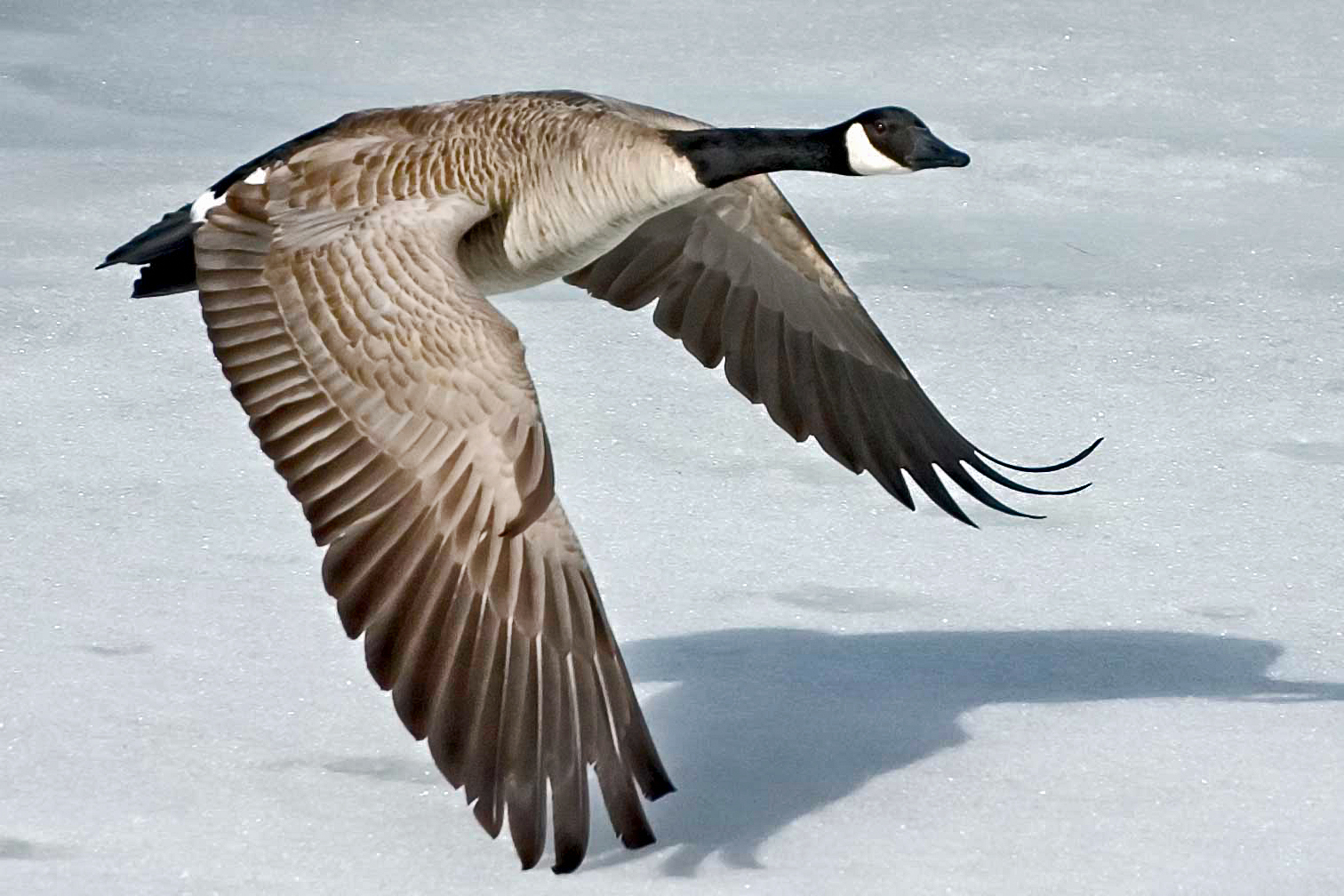
Once upon a time,  not too long ago, the Canada Goose was endangered!


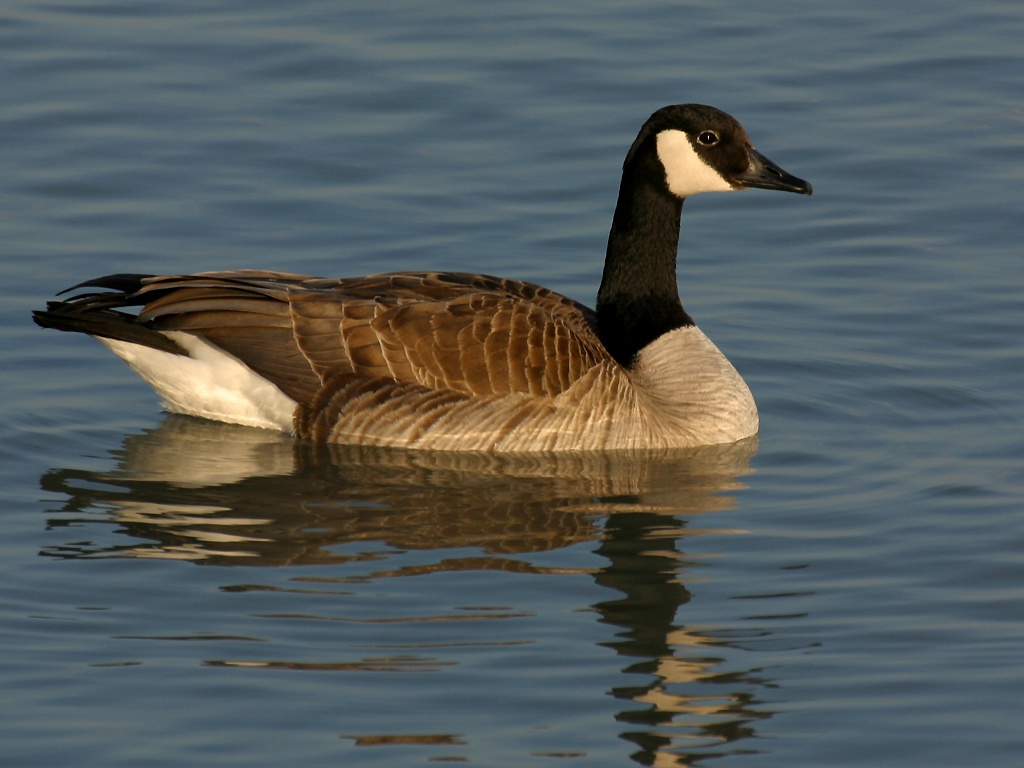
Enjoying a swim.
These geese originally lived in the north of Canada, migrating south like the classic goose does. Due to extreme over-hunting and habitat loss in the 1800 and 1900s, their numbers dropped. In 1962, the subspecies of the Giant Canada Goose was thought to be extinct until a small flock was found hiding away in Minnesota! Attempts were made to breed the geese in captivity, and it worked marvelously! However, the geese lost their sense of migration in whilst in captivity, and thus: They have heavily repopulated and stay in the northern United States of America! Hooray for the geese! (Sorry golfers!)


Swooping over the snow.

Success!